As conversations around mental health continue to evolve nationally, this year's American Psychiatric Association (APA) conference took place in San Francisco at a critical time — bringing mental health leaders together to reexamine what true wellness looks like.
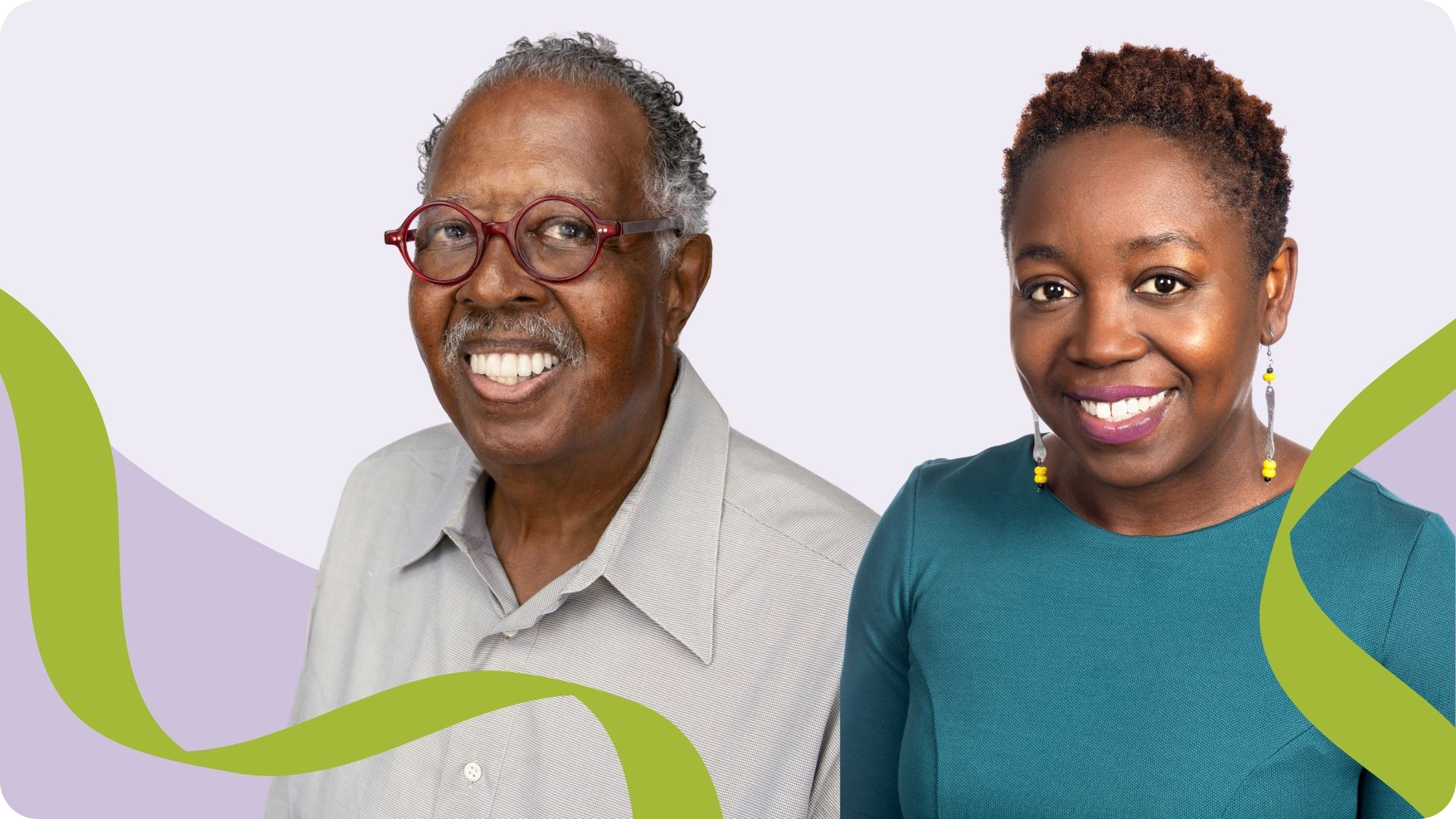
For Dr. Sarah Vinson, these conversations are more important than ever. A triple-boarded certified psychiatrist, educator, Felton Board Member, and Distinguished Fellow of the APA, Dr. Vinson sees the field as being in a moment of reflection and reevaluation.
"It's a time where people are being forced to question the status quo and the default ways of doing things," she says. "There were a lot of things about our system that were not working well, especially for people from marginalized groups."
This year's conference theme, Empowering the Psychiatric Workforce, signaled a collective push to strengthen the systems and professionals at the heart of mental health care. For Dr. Vinson, it represented exactly the kind of honest conversation the field needs.
"We say mental health care, but really what we do as a system is sick care," she explains. "People only see us if there's a problem. The field is not one that actually promotes health. It's one that treats illness." She points to her own training as an example: "Six years after medical school at Harvard, and I never had a class on mental health. It's really hard to have a field pushing the population toward a healthier reality if you stop at symptom mitigation."
The second major challenge, she says, is money. "We live in a capitalist society. People get what they can pay for — and they don't get what they can't. Psychiatry and mental health more broadly have been the canary in the coal mine around how healthcare funding structures end up driving people out of systems and exacerbating inequities." At Morehouse School of Medicine, where Dr. Vinson leads a child psychiatry fellowship program, she and her colleagues opened the first-ever youth mental health clinic in East Point, Georgia — a city just south of Atlanta with one of the highest per capita crime rates in the country. "There was not a single youth mental health provider in that city," she says. "And in order for us to have people there, we have to fundraise to provide care."
At the APA conference, Dr. Vinson presented on a panel titled "Intercepting Youth: Proactive Strategies for Community-Based Care," examining how early, coordinated interventions can disrupt the school-to-prison pipeline. "By the time they're in the justice system and we're evaluating them, a lot has already gone wrong," she says.
That same belief in prevention, equity, and early support is deeply reflected in the work happening every day at Felton Institute.
For Dr. George Woods, Felton's Chief of Clinical Innovation and Board Chair, these national conversations become meaningful when they connect back to local communities. At the heart of Felton's approach is a recognition that "meeting people where they are" is not just something we say. "The social determinants of health, which for a long time were thought of as ancillary to real health, have now been found to be the core components," Dr. Woods says. "Physically going to them rather than them coming to us can really change the power dynamic."
It also means centering lived experience and approaching without judgement. "Lived experience brings empathy because these issues can be so complex," he explains — and it reflects a broader shift he sees in the field, from evidence-based toward community-informed practice. "It's the community that really allows us to develop the most specific support. By being part of the community, we are really doing the best science. And that's why I'm here."
 As the field continues to evolve, both leaders point toward the next generation as a source of hope. "There are ways that we're seeing young people push for change and question narratives that have defined our field for a long time," Dr. Vinson says.
That momentum — both nationally and locally — reflects a growing understanding that mental health care must extend beyond treatment rooms and into schools, neighborhoods, justice systems, and communities themselves, because mental health is ours.
Felton Institute responds to the needs of our community by providing innovative, evidence-informed social services to transform lives. Our organization offers 50+ programs that address mental health, the unhoused, early care and education, those impacted by the justice system, transitional age youth, as well as aging adults. Our award-winning programs, which have been recognized as national models, combine the latest scientific research with cultural sensitivity and a deep commitment to supporting and reflecting the communities we serve.
Founded in 1889, Felton is the oldest secular non-profit social services provider in the City and County of San Francisco. We have expanded our services across most Bay Area counties and continue to be at the forefront of pioneering new approaches to meet the emerging needs of underserved populations.
We know what it looks like to successfully build community.
We foster impactful change by strengthening the community as a premier service provider. We also strengthen other service providers by supporting them in their fiscal, human resources, communications, IT and overall agency operations. With Felton’s support, they are able to focus on providing the best services to their clients, doing the work they were meant to do.
Felton empowers the community and ensures successful outcomes to all we engage with.
Felton Institute is a tax-exempt organization registered 501(c)(3) nonprofit under EIN 94-1156530.